
We’d love to hear from you! Whether you want to volunteer, support our programs, or learn more about our initiatives.
Call At: +211 (0) 923069505 | +211 (0) 915851838
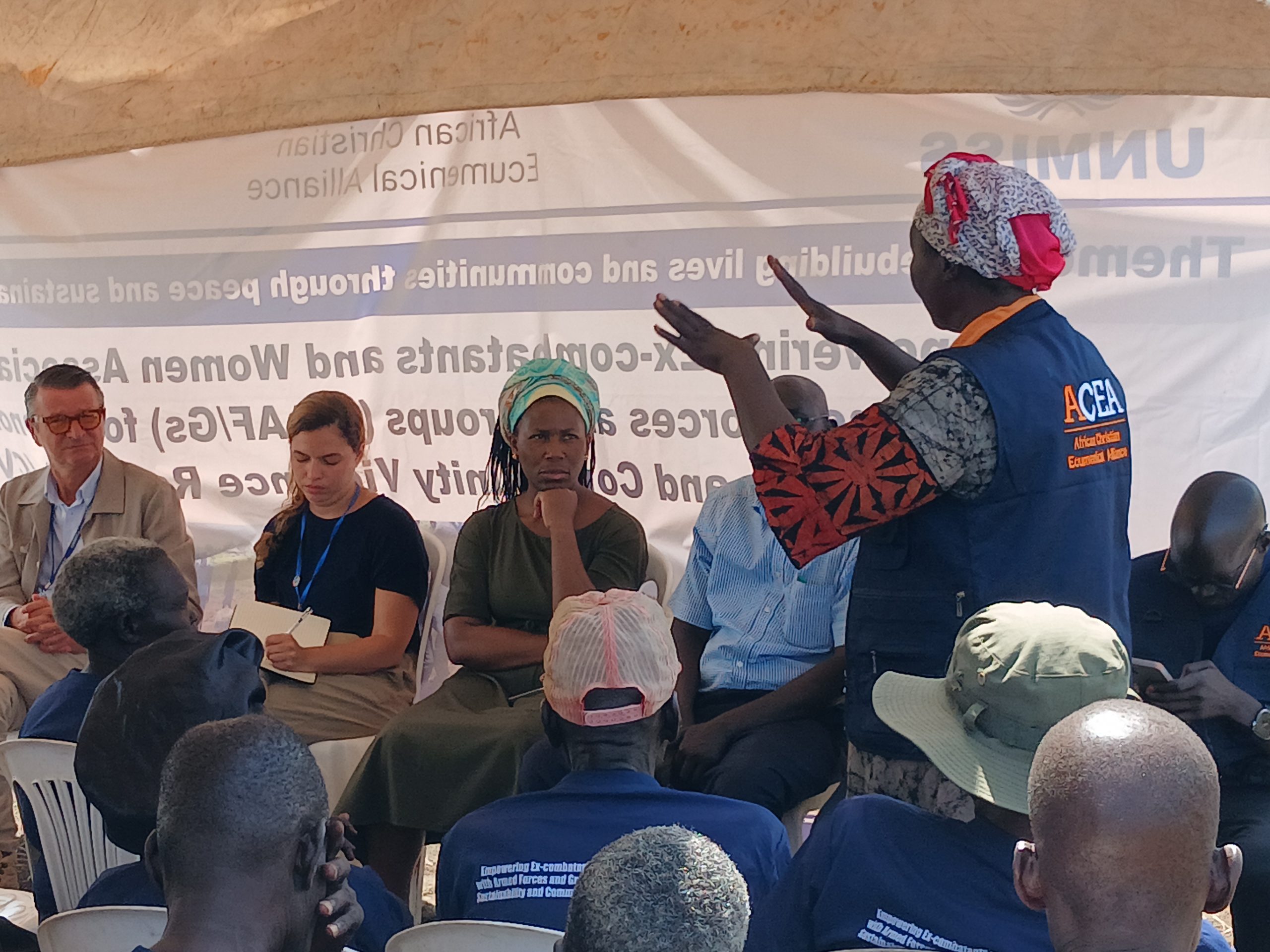
Enhancing Humanitarian Coordination, GBV Prevention, Risk Mitigation, and Response Services for Conflict-Affected Populations in Abyei
The African Christian Ecumenical Alliance (ACEA), in partnership with the International Organization for Migration (IOM) under the Rapid Response Fund (RRF), implemented a comprehensive gender-based violence (GBV) prevention, risk mitigation, and response project in the Abyei Administrative Area. The intervention responded to the urgent protection needs arising from recurrent inter-communal violence, repeated displacement, and the influx of returnees fleeing conflict in Sudan.
Implemented across five payams in Abyei, the project targeted internally displaced persons (IDPs), returnees, and host communities, with a particular focus on women and girls facing heightened risks of GBV, including abduction, rape, domestic violence, and other forms of abuse. Through community-based awareness, safety patrols, GBV case management, safe spaces, dignity support, staff capacity building, and coordination with humanitarian partners, the project sought to strengthen protection systems, improve access to survivor-centred services, and reduce GBV risks in conflict-affected communities.
The Abyei Administrative Area remains highly vulnerable to conflict, displacement, and protection risks due to recurrent inter-communal violence and the spillover effects of the conflict in Sudan. The influx of returnees and displaced populations has placed further pressure on already fragile social and service systems, increasing exposure to violence and exploitation.
Women and girls have been disproportionately affected, facing elevated risks of gender-based violence, including abduction, rape, domestic violence, and sexual assault. These risks are compounded by limited access to GBV prevention and response services, weak referral pathways, low awareness of available support, and harmful social norms that often silence survivors or normalize abuse.
In response, ACEA and IOM implemented this project to strengthen community-based protection, improve survivor access to essential GBV services, and enhance humanitarian coordination to support a more effective and locally grounded protection response in Abyei.
The project aimed to enhance humanitarian coordination and strengthen GBV prevention, risk mitigation, and response services for conflict-affected populations in Abyei, with a focus on women and girls at heightened risk of violence and exploitation.
The intervention targeted IDPs, returnees, and host community members across five payams in Abyei, with particular emphasis on:
The project conducted extensive community sensitization sessions on GBV prevention, risk mitigation, response services, and referral pathways in public spaces, schools, markets, and churches. A total of 3,969 individuals (2,669 females and 1,300 males) were reached with information designed to improve awareness of GBV risks, strengthen understanding of available support services, and encourage early reporting and referral.
Recognizing the importance of engaging men and boys in prevention efforts, the project facilitated targeted male engagement sessions involving 278 men. These sessions focused on:
Participants were further organized into male protection networks, which continue to advocate for safer communities and reinforce messages against GBV and harmful gender norms.
To address protection risks faced by women and girls during daily tasks such as collecting firewood and water, the project established and supported 15 community-based safety patrol groups comprising 82 members. These patrol teams provided accompaniment and protection support, contributing to a significant reduction in abduction incidents—from 28 reported cases to 3 cases during the reporting period.
The project strengthened access to survivor-centred case management and psychosocial support services for individuals affected by violence. A total of 34 GBV cases were reported and managed, including cases of:
Survivors received tailored support, including psychosocial care, case follow-up, and dignity kits to address immediate personal and hygiene needs.
To expand access to safe and confidential support, the project constructed two semi-permanent Women and Girls’ Friendly Spaces (WGFS) in Awolnhom and Mading Achueng. These facilities provide secure spaces where women and girls can access:
The WGFS structures serve as important community-based entry points for protection, healing, and empowerment.
To improve the quality of GBV response, the project provided refresher training to 7 staff members (5 social workers and 2 GBV case workers) on:
This strengthened the technical capacity of frontline responders to provide safe, confidential, and survivor-centred support to individuals affected by violence.
ACEA played a central role in strengthening GBV coordination in Abyei by leading monthly GBV Area of Responsibility (AoR) coordination meetings involving 19 humanitarian partners, including UNISFA, UNHCR, IOM, Save the Children, and MSF. These meetings improved:
The project distributed dignity kits to 127 women of reproductive age, containing essential hygiene and sanitary items. Distribution was accompanied by awareness sessions on reproductive health, personal hygiene, and GBV-related risks and support services, helping to restore dignity and improve wellbeing among vulnerable women and girls.
A total of 4,038 individuals gained awareness of GBV prevention and response services, including referral pathways, psychosocial support, and available protection mechanisms, improving community knowledge and access to support.
The establishment of safety patrol teams and the engagement of male protection networks contributed to a significant reduction in abduction cases and improved the safety of women and girls during high-risk daily activities.
The project established 15 safety patrol groups and strengthened male engagement networks, creating sustainable community-led mechanisms for GBV prevention, early identification of risks, and support to vulnerable populations.
The construction of two Women and Girls’ Friendly Spaces and the provision of case management and psychosocial support improved access to confidential, survivor-centred services for women and girls affected by violence.
Training in GBV case management, PSEA, and psychological first aid improved the technical skills of ACEA staff and strengthened the quality of support available to survivors.
Monthly AoR coordination meetings with 19 humanitarian partners improved collaboration, service mapping, joint planning, and referral systems, contributing to a more coordinated and effective GBV response in Abyei.
The Enhancing Humanitarian Coordination, GBV Prevention, Risk Mitigation, and Response Services for Conflict-Affected Populations in Abyei project demonstrates ACEA’s capacity to deliver integrated and survivor-centred protection programming in fragile humanitarian settings. By combining community awareness, male engagement, safety patrols, GBV case management, safe spaces, dignity support, staff training, and coordination leadership, the project strengthened both prevention and response systems for women and girls affected by violence. In doing so, it not only improved immediate access to life-saving services but also reinforced community protection mechanisms and humanitarian coordination essential for longer-term resilience and safety in Abyei.
Have questions about ACEA and our work? Below are some of the most commonly asked questions about who we are, what we do, and how we support vulnerable communities across Africa through humanitarian response, recovery, and resilience-building initiatives.
The African Christian Ecumenical Alliance (ACEA) is a faith-based humanitarian and development organization working to empower vulnerable communities across Africa through relief, recovery, resilience, and spiritual support initiatives.
ACEA works in disaster relief and recovery, community resilience, peace building, education support, livelihood improvement, trauma healing, and humanitarian response.
ACEA supports vulnerable populations including refugees, internally displaced people (IDPs), returnees, women, children, persons with disabilities, and host communities affected by crisis and poverty.
You can support ACEA by donating, partnering with us, volunteering, or helping amplify our mission to reach vulnerable communities across Africa.

Empowering communities, advancing equality, and creating long-term social change through advocacysupport.
Hai Mayo, Juba South Sudan RJR2+CF8, Juba, South Sudan
Copyright © 2026 All Rights Reserved.