
We’d love to hear from you! Whether you want to volunteer, support our programs, or learn more about our initiatives.
Call At: +211 (0) 923069505 | +211 (0) 915851838
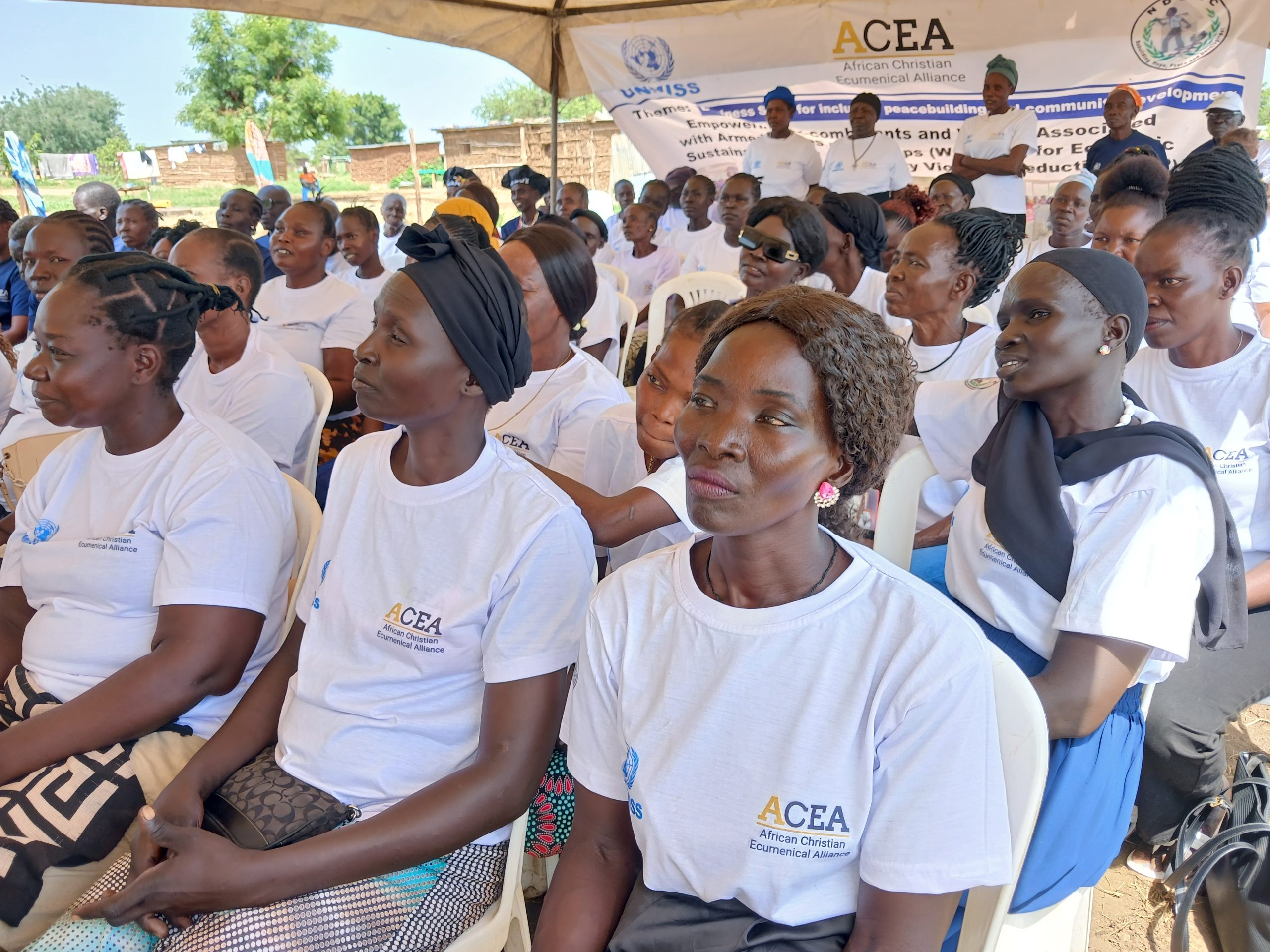
Promoting Spaces for Conflict Prevention and Reduced Vulnerability in Abyei
The African Christian Ecumenical Alliance (ACEA), in partnership with the United Nations Population Fund (UNFPA), is implementing a joint programme under the Resident Coordinators in Sudan and South Sudan to address the urgent protection, sexual and reproductive health (SRH), and gender-based violence (GBV) needs of conflict-affected populations in Abyei. The programme responds to the heightened vulnerabilities created by the ongoing conflict in Sudan and its spillover effects in the contested border region of Abyei, where fragile social cohesion has been further strained by displacement, insecurity, and pressure on already limited services.
The intervention targets the most vulnerable groups, including internally displaced persons (IDPs), returnees fleeing conflict in Sudan, and host communities, with a focus on reducing inequitable access to essential services, strengthening protection mechanisms, and creating safer spaces for women and girls. Through an integrated cross-border approach, the programme also contributes to conflict prevention, social cohesion, and long-term resilience in Abyei.
Abyei remains one of the most fragile and contested border regions between Sudan and South Sudan, with communities facing recurring displacement, insecurity, and weak access to essential social services. The ongoing conflict in Sudan has further increased population movements into Abyei, placing additional strain on local resources and deepening vulnerabilities among women, girls, and displaced households.
In this context, sexual and reproductive health (SRH) services and gender-based violence (GBV) prevention and response mechanisms are particularly critical. Women and girls face heightened risks of violence, exploitation, and exclusion from life-saving services, while harmful social norms, weak referral systems, and limited community-based protection structures continue to undermine their safety and wellbeing.
This joint programme was therefore designed to provide integrated support to conflict-affected populations while also fostering dialogue, trust, and peaceful coexistence among IDPs, returnees, and host communities.
The programme aims to reduce vulnerability and strengthen conflict prevention in Abyei by improving access to GBV and SRH services, creating safe and inclusive spaces for women and girls, and promoting community-based protection, awareness, and peaceful coexistence among conflict-affected populations.
The programme focuses on vulnerable populations in Abyei, particularly:
The project supports the functioning of Women and Girls’ Safe Spaces (WGSS), which provide a safe and confidential environment where women and girls can access specialized GBV services. These services include:
In addition, the programme establishes and strengthens Community-Based Protection Networks (CBPNs) to serve as a critical bridge between communities and service providers. These networks help identify risks, raise awareness, and facilitate access to support for survivors and vulnerable individuals.
The programme supports the delivery of essential sexual and reproductive health services to conflict-affected populations, addressing urgent healthcare needs and service gaps that have been exacerbated by displacement and insecurity. This contributes to improved access to life-saving and dignity-affirming health services for women and girls in Abyei.
To address harmful social norms and improve knowledge of protection services, the project conducts:
These activities not only increase awareness of GBV prevention and available support services but also create opportunities for dialogue and understanding across communities affected by displacement and conflict.
As part of efforts to reduce women’s exposure to GBV risks, the project distributes fuel-efficient stoves to vulnerable women and female-headed households. This practical support reduces the need for long and potentially dangerous firewood collection trips, which often expose women and girls to violence and exploitation.
The programme works to establish and strengthen coordinated GBV referral pathways, ensuring that survivors can access timely, safe, and survivor-centred support across multiple sectors. This includes improved linkages between community structures, health services, psychosocial support, and protection actors.
A key strength of the programme is its cross-border and conflict-sensitive approach. By engaging IDPs, returnees, and host communities from diverse ethnic and social backgrounds, the intervention creates platforms for dialogue on:
This integrated approach helps address not only the immediate needs of vulnerable populations but also some of the underlying drivers of exclusion, mistrust, and social fragmentation in Abyei.
Women, girls, and other vulnerable populations have improved access to safe spaces, specialized GBV services, psychosocial support, and essential SRH services, contributing to better protection, dignity, and wellbeing.
The establishment of WGSS, strengthened referral pathways, and distribution of fuel-efficient stoves help reduce women’s and girls’ exposure to GBV risks and improve their access to timely support when incidents occur.
Community-Based Protection Networks are better equipped to identify risks, support referrals, and serve as trusted structures for awareness raising and community engagement on protection issues.
Community dialogues, awareness sessions, radio programmes, and male engagement initiatives contribute to improved understanding of GBV prevention, available services, and the importance of gender equality and non-violence.
By bringing together IDPs, returnees, and host communities in shared dialogue and awareness spaces, the programme contributes to improved trust, social cohesion, and community resilience in a fragile and contested setting.
The Promoting Spaces for Conflict Prevention and Reduced Vulnerability in Abyei programme reflects ACEA’s commitment to delivering integrated, conflict-sensitive, and protection-centred programming in fragile contexts. By combining GBV prevention and response, SRH service support, community-based protection, practical risk mitigation, and cross-border social cohesion efforts, the programme addresses both the immediate needs and the structural vulnerabilities facing displaced populations and host communities in Abyei. In doing so, it contributes not only to improved protection and wellbeing, but also to stronger foundations for peace, resilience, and coexistence in one of the region’s most complex humanitarian settings.
This program is designed to support individuals and families in underserved communities who face challenges related to education, health, livelihoods, and access to basic resources.
The African Christian Ecumenical Alliance (ACEA) is a faith-based humanitarian and development organization working to empower vulnerable communities across Africa through relief, recovery, resilience, and spiritual support initiatives.
ACEA works in disaster relief and recovery, community resilience, peace building, education support, livelihood improvement, trauma healing, and humanitarian response.
ACEA supports vulnerable populations including refugees, internally displaced people (IDPs), returnees, women, children, persons with disabilities, and host communities affected by crisis and poverty.
You can support ACEA by donating, partnering with us, volunteering, or helping amplify our mission to reach vulnerable communities across Africa.

Empowering communities, advancing equality, and creating long-term social change through advocacysupport.
Hai Mayo, Juba South Sudan RJR2+CF8, Juba, South Sudan
Copyright © 2026 All Rights Reserved.